Autonomous Driving Fatalities: Legal Vacuum in Liability Allocation

Jun 14, 2025 By

The gleaming promise of autonomous vehicles has long been accompanied by an uncomfortable question: who bears responsibility when these machines kill? As self-driving cars transition from science fiction to public roads, a troubling legal vacuum has emerged around accountability for fatal accidents involving artificial intelligence systems. This gray area leaves victims' families in limbo while manufacturers, regulators, and legislators scramble to define new frameworks for the age of machine decision-making.

Recent high-profile crashes have exposed the inadequacy of existing liability laws. When a pedestrian was struck and killed by an autonomous test vehicle in Arizona, the ensuing legal battle revealed startling gaps in traditional negligence doctrines. The company argued its AI behaved as programmed, while prosecutors struggled to apply human driver standards to algorithmic judgment calls made in milliseconds. Courts find themselves interpreting traffic laws written decades before anyone conceived of vehicles without steering wheels.

The heart of the problem lies in translating analog-era legal concepts to digital decision-makers. Traditional tort law distinguishes between manufacturer defects (strict liability) and operator error (negligence). But when a machine learning system evolves beyond its original programming through neural networks, these categories blur uncomfortably. A vehicle's "choice" to swerve into one obstacle rather than another may reflect training data biases rather than coding flaws—raising philosophical questions about whether AI can truly "decide" in the legal sense.

Insurance models compound the confusion. Current auto insurance frameworks assume human risk factors like age, sobriety, and attentiveness. Autonomous systems render these metrics meaningless, forcing insurers to calculate premiums based on software version numbers and sensor reliability statistics. Some providers have begun offering "algorithmic liability" policies, but these remain untested in widespread litigation.

Manufacturers walk a tightrope between innovation and accountability. Internal documents from several automakers reveal intense debates about how much control to retain over self-driving systems. Fully autonomous vehicles promise greater safety by eliminating human error, but also assume catastrophic failure responsibility. This has led some companies to deliberately limit their vehicles' operational domains—a strategy that may reduce legal exposure but frustrates regulators pushing for broader adoption.

The regulatory landscape resembles a patchwork quilt. Some jurisdictions treat the AI system as the driver, others designate the human occupant (if present) as ultimately responsible, while a few have created entirely new categories of "vehicle operators" that could be corporate entities. This inconsistency creates headaches for manufacturers developing vehicles for national markets and raises troubling questions about forum shopping in wrongful death cases.

Consumer protection laws offer little solace. Traditional product liability requires proving a specific defect, but neural networks' decision-making processes often resemble black boxes—even to their creators. Several courts have already ruled that plaintiffs cannot compel disclosure of proprietary algorithms, leaving families of victims unable to demonstrate how or why fatal decisions occurred. This evidentiary hurdle may require entirely new standards for transparency in machine learning systems.

International approaches highlight the depth of the dilemma. The European Union favors strict manufacturer liability but struggles to define what constitutes "reasonable" AI behavior. China has implemented real-time data monitoring requirements, creating records of system states before crashes—a solution that raises privacy concerns. Meanwhile, some U.S. states have essentially granted immunity to autonomous vehicle developers as part of economic development incentives, setting up potential conflicts between state and federal courts.

Legal scholars propose radical solutions ranging from treating AI systems as legal persons (complete with "driver's licenses" that can be revoked) to creating no-fault compensation funds similar to vaccine injury programs. The most pragmatic suggestions involve adaptive regulations that evolve alongside the technology, but such frameworks require legislative agility rarely seen in government bodies.

The human cost of this uncertainty becomes apparent in courtroom testimony. One grieving spouse described the surreal experience of deposing engineers about "what the car was thinking" during the milliseconds before impact. Another family's attorney recounted the challenge of arguing against a defendant that wasn't a person but couldn't be examined like typical machinery either. These emotional narratives underscore how existing legal structures fail to address the unique trauma of deaths mediated by artificial intelligence.

As the technology advances faster than the law can adapt, a troubling precedent emerges: the richer and more technologically sophisticated the defendant, the harder it becomes for victims to obtain justice. This imbalance threatens to erode public trust in autonomous vehicles precisely when their safety benefits—reduced drunk driving, fewer traffic fatalities overall—could save thousands of lives annually. The legal vacuum surrounding autonomous vehicle fatalities represents more than a technical loophole; it's a fundamental challenge to how societies allocate responsibility in an increasingly automated world.

Recommend Posts
Auto

Cybersecurity: Invasion Risks of OTA Upgrades

By /Jun 14, 2025

The automotive industry's rapid shift toward connected vehicles has brought Over-the-Air (OTA) updates into the spotlight as both a technological breakthrough and a potential security liability. While OTA systems enable manufacturers to deliver software patches, feature enhancements, and critical firmware updates seamlessly, they also introduce new attack surfaces that malicious actors are eager to exploit. Recent incidents have demonstrated that compromised OTA pipelines can serve as gateways for large-scale vehicle intrusions, data breaches, and even physical sabotage.
Auto

Adaptive High-Beam Response Speed for Lighting Safety

By /Jun 14, 2025

The automotive industry has witnessed remarkable advancements in lighting technology over the past decade, with adaptive driving beam (ADB) headlights emerging as a game-changer for nighttime safety. Unlike traditional static headlights, these intelligent systems dynamically adjust their beam patterns to avoid blinding oncoming drivers while maximizing visibility. At the heart of this innovation lies a critical performance metric: reaction speed. How quickly these systems detect, process, and respond to changing road conditions directly impacts their effectiveness and ultimately, road safety.
Auto

Roof Pressure Resistance: Structural Reinforcement of Panoramic Skylights

By /Jun 14, 2025

The automotive industry has witnessed a significant shift in design preferences over the past decade, with panoramic sunroofs—commonly referred to as "panoramic sunroofs" or "panoramic roofs"—becoming a highly sought-after feature among consumers. These expansive glass panels, which often stretch from the front windshield to the rear of the vehicle, provide an open, airy cabin experience while maintaining structural integrity. However, the integration of such large glass surfaces into a vehicle's roof raises critical questions about safety, particularly concerning roof crush resistance. As regulatory standards tighten and consumer expectations rise, automakers are investing heavily in advanced materials and structural reinforcement techniques to ensure that panoramic sunroofs meet stringent safety requirements without compromising aesthetics or functionality.
Auto

Emergency Escape: Mechanical Backup for Electronic Door Locks

By /Jun 14, 2025

The growing adoption of electronic door locks in residential and commercial buildings has brought convenience and enhanced security. However, this technological shift has also introduced a critical vulnerability: what happens when power fails or the system malfunctions? The importance of mechanical backup mechanisms in electronic locks cannot be overstated, as they serve as a lifeline during emergencies.
Auto

Child Left Behind Alarm: Blind Spot of Ultrasonic Sensors

By /Jun 14, 2025

The persistent beeping of a reversing vehicle has become an auditory hallmark of modern life – but what happens when this safety system fails to detect a child in its path? Recent investigations into ultrasonic sensor blind spots have revealed alarming gaps in the very technology designed to prevent tragic backover accidents. These findings have sent shockwaves through the automotive safety community, forcing manufacturers and regulators to confront an uncomfortable truth about the limitations of our current collision avoidance systems.
Auto

Silent Tires: Compromises in Wet Braking Performance

By /Jun 14, 2025

The pursuit of quieter rides has led to significant advancements in tire technology, particularly with the development of silent or low-noise tires. These specialized tires are engineered to minimize road noise, providing a more comfortable and peaceful driving experience. However, as manufacturers focus on reducing noise levels, questions arise about potential trade-offs, especially in critical performance areas such as wet braking. The balance between silence and safety becomes a crucial consideration for both tire engineers and consumers.
Auto

Electromagnetic Radiation: Health Concerns for Electric Vehicle Passengers

By /Jun 14, 2025

The growing popularity of electric vehicles (EVs) has sparked widespread discussions about their environmental benefits and technological advancements. However, amid the enthusiasm for cleaner transportation, concerns have emerged regarding potential health risks associated with electromagnetic radiation exposure for passengers. Unlike traditional internal combustion engine vehicles, EVs rely on high-voltage batteries and powerful electric motors, which generate electromagnetic fields (EMFs). While these emissions fall within regulated safety limits, the long-term effects of prolonged exposure remain a topic of scientific scrutiny and public debate.
Auto

Body Steel: The Competition of Hot-Formed Steel Proportion

By /Jun 14, 2025

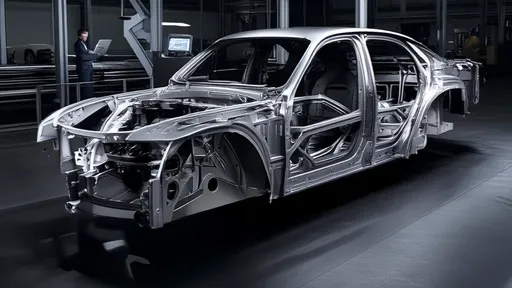
The automotive industry has long been engaged in a quiet but fierce competition over the proportion of hot-formed steel used in vehicle bodies. This material, known for its exceptional strength-to-weight ratio, has become a cornerstone of modern car manufacturing, particularly as safety and efficiency standards grow increasingly stringent. The race to incorporate higher percentages of hot-formed steel isn’t just about marketing—it’s a technological arms race with tangible implications for crashworthiness, fuel economy, and overall structural integrity.
Auto

Collision Warning: Rain and Fog Attenuation of Millimeter Wave Radar

By /Jun 14, 2025

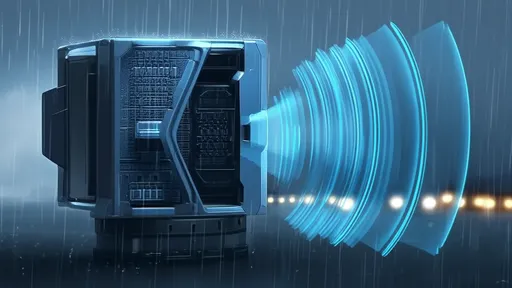
As autonomous driving technology advances, millimeter-wave radar has become a cornerstone of modern collision avoidance systems. Yet its performance in adverse weather conditions—particularly rain and fog—remains a critical challenge for engineers and automotive manufacturers. The physics of signal attenuation in these environments reveals a complex interplay between electromagnetic waves and atmospheric particles, one that could mean the difference between a near-miss and a catastrophic failure.
Auto

Water Depth Involvement: Challenges for High-Voltage Systems of Electric Vehicles"

By /Jun 14, 2025

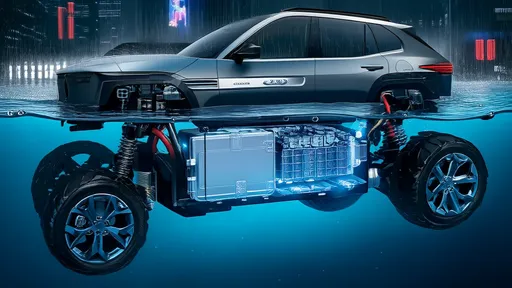
The growing adoption of electric vehicles (EVs) has brought new engineering challenges to the forefront, particularly when it comes to water exposure. Unlike traditional internal combustion engine vehicles, EVs rely heavily on high-voltage systems that are far more sensitive to moisture ingress. The risks associated with water intrusion—ranging from electrical shorts to catastrophic battery failures—demand rigorous design considerations, especially as automakers push for higher wading depths to match or exceed conventional off-road capabilities.
Auto

Autonomous Driving Fatalities: Legal Vacuum in Liability Allocation

By /Jun 14, 2025

The gleaming promise of autonomous vehicles has long been accompanied by an uncomfortable question: who bears responsibility when these machines kill? As self-driving cars transition from science fiction to public roads, a troubling legal vacuum has emerged around accountability for fatal accidents involving artificial intelligence systems. This gray area leaves victims' families in limbo while manufacturers, regulators, and legislators scramble to define new frameworks for the age of machine decision-making.
Auto

Battery Needle Puncture Test: Industry Standards vs. Real-World Scenarios

By /Jun 14, 2025

The battery nail penetration test has become a cornerstone of safety evaluations in the lithium-ion battery industry. Designed to simulate internal short circuits caused by physical damage, this controversial test pushes batteries to their thermal limits while revealing critical differences between standardized procedures and real-world failure scenarios. As electric vehicles and energy storage systems demand increasingly robust safety assurances, the gap between laboratory conditions and unpredictable field environments raises pressing questions about how we define true battery safety.
Auto

25% Offset Crash: Differences in Testing Standards between China and the US

By /Jun 14, 2025

The 25% small overlap frontal crash test has emerged as one of the most revealing evaluations of modern vehicle safety. While both the United States and China have incorporated this demanding assessment into their respective safety protocols, subtle yet significant differences in testing methodologies and evaluation criteria have created a divergence in how vehicles perform across these two critical automotive markets.
Auto

Rearview Mirror-less Design: Technological Advancement Outpacing Regulatory Lag"

By /Jun 14, 2025

The automotive industry stands at the precipice of a design revolution, one that challenges a fundamental fixture of vehicle architecture: the side mirror. For nearly a century, these protruding appendages have been mandated by safety regulations worldwide, their existence unquestioned. Yet today, sleek camera-based monitoring systems promise superior aerodynamics, reduced noise, and expanded visibility – if only legal frameworks would allow them.
Auto

Hidden Wiper Blades: The Dilemma of Aesthetics vs. Efficiency"

By /Jun 14, 2025

The automotive industry has long grappled with the delicate balance between aesthetics and functionality. Nowhere is this tension more apparent than in the evolution of windshield wiper systems, particularly the rise of hidden wipers. These sleek, concealed designs promise to maintain a vehicle's clean lines while performing the essential task of keeping windshields clear. But as manufacturers push the boundaries of form and function, questions arise about whether we're sacrificing too much practicality at the altar of style.
Auto

Wheelbase Tug-of-War: The Trade-off Between Rear Space and Handling

By /Jun 14, 2025

The eternal tug-of-war between rear passenger comfort and dynamic handling has long defined automotive engineering priorities. At the heart of this conflict lies the wheelbase - that critical measurement between front and rear axles that influences everything from legroom to cornering stability. As manufacturers navigate this compromise, we're witnessing fascinating divergences in how brands interpret the balance between space and sportiness.
Auto

Interior De-Buttonization: The Downgrade of Haptic Feedback Experience

By /Jun 14, 2025

The automotive industry's relentless pursuit of minimalist interiors has reached a curious crossroads. As manufacturers systematically eliminate physical buttons in favor of touchscreen interfaces and haptic surfaces, a growing chorus of drivers and industry observers are questioning whether this represents true progress or an uncomfortable compromise in usability.
Auto

Retrofuturism: Classic Reproductions of the Electric Age

By /Jun 14, 2025

The automotive world stands at an intriguing crossroads where nostalgia collides with cutting-edge technology. Retrofuturism: Classic Reborn in the Electric Age isn't just a design trend—it's a cultural movement redefining how we perceive progress. Across continents, design studios and boutique manufacturers are resurrecting iconic silhouettes from the 1950s through 1980s, but beneath those familiar curves now hums the silent power of lithium-ion batteries. This phenomenon speaks to something deeper than aesthetics; it's about reconciling our emotional attachment to automotive history with the urgent necessity of sustainable transportation.
Auto

The Compatibility Challenge of Edge Lines and Wind Tunnels in Mecha Style"

By /Jun 14, 2025

The marriage between sharp angular designs and aerodynamic efficiency has long been a contentious issue in mecha engineering circles. While fans adore the aggressive, faceted aesthetics of armored behemoths, physicists keep pointing to the fundamental incompatibility between hard edges and airflow dynamics. This tension between form and function continues to redefine the boundaries of combat machine design.
Auto

Through-Type Tail Lights: A Design Competition for Nighttime Recognition"

By /Jun 14, 2025

The automotive lighting landscape has undergone a dramatic transformation in recent years, with full-width taillights emerging as the new battleground for brand recognition after dark. What began as a styling novelty has evolved into a sophisticated design language that combines aesthetics, technology, and safety in equal measure.