Battery Needle Puncture Test: Industry Standards vs. Real-World Scenarios

Jun 14, 2025 By

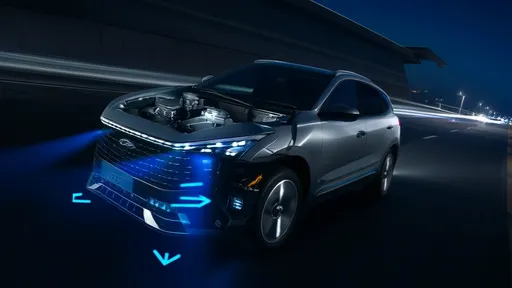
The battery nail penetration test has become a cornerstone of safety evaluations in the lithium-ion battery industry. Designed to simulate internal short circuits caused by physical damage, this controversial test pushes batteries to their thermal limits while revealing critical differences between standardized procedures and real-world failure scenarios. As electric vehicles and energy storage systems demand increasingly robust safety assurances, the gap between laboratory conditions and unpredictable field environments raises pressing questions about how we define true battery safety.

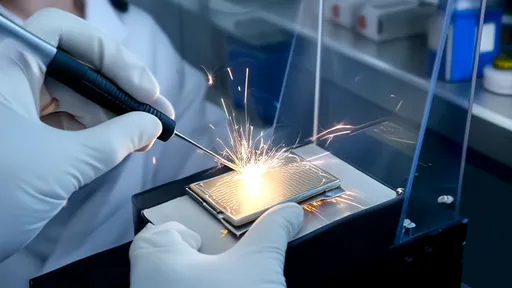
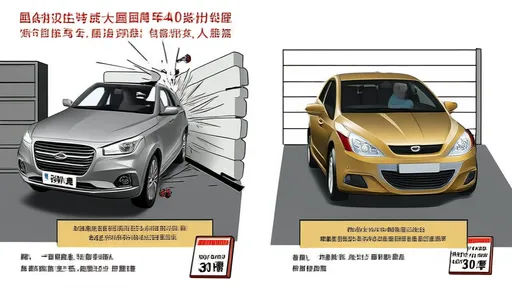
At its core, the nail test involves driving a conductive metal rod (typically 3-8mm in diameter) through a fully charged battery cell at controlled speeds while monitoring temperature, voltage, and thermal runaway propagation. Industry standards like GB/T 31485 in China and UL 2580 in North America prescribe specific parameters, but these idealized conditions often fail to account for the chaotic variables present in actual accidents. The controlled laboratory environment—with its thermal chambers and precisely positioned nails—creates a false sense of security that doesn't translate to crumpled vehicle frames puncturing battery packs at odd angles during highway collisions.

Manufacturers walk a tightrope between regulatory compliance and genuine safety engineering. Some cells pass certification tests by incorporating thin metal layers that melt upon penetration, temporarily isolating electrodes before catastrophic thermal runaway. While effective under test conditions, such designs may provide limited protection against multiple penetration points or prolonged short circuits occurring in real accidents. The automotive industry has witnessed cases where cells passing nail tests still experienced cascading failures when damaged in uncontrolled environments.

Thermal propagation presents another critical divergence between test scenarios and reality. Standard tests often evaluate single cells in isolation, whereas pack-level failures involve complex interactions between hundreds of cells. The spacing between cells, coolant flow patterns, and structural integrity of modules create variables no single-cell test can accurately replicate. Recent battery fires in energy storage systems have demonstrated how thermal runaway in one cell can bypass protective systems designed for standardized failure modes.

Material science innovations are quietly reshaping the nail test's relevance. Phase-change materials that absorb tremendous heat, ceramic-coated separators with higher melt points, and self-healing electrolytes are changing failure dynamics. These advancements render traditional pass/fail criteria increasingly obsolete—a cell that appears dangerous during nail penetration might contain the failure through novel chemistry rather than prevent it entirely. Regulatory bodies now face the challenge of updating test protocols to account for these technological leaps.

The velocity and angle of penetration prove far more consequential than most standards acknowledge. Research from the National Renewable Energy Laboratory shows that nails driven at automotive crash speeds (20-50mm/ms) create fundamentally different short circuit behaviors compared to the 1-10mm/s speeds used in certification tests. The rapid mechanical deformation alters internal architecture before protective mechanisms can activate, often resulting in more violent failures. This explains why some battery packs certified as safe have still suffered catastrophic thermal events in high-speed collisions.

Real-world damage rarely resembles the clean punctures of laboratory tests. Crumple zones create complex deformation patterns that simultaneously damage multiple cell locations, while road debris may introduce conductive contaminants that exacerbate short circuits. These multidimensional failure modes expose a fundamental limitation of single-vector penetration tests. Some European automakers have begun supplementing standard nail tests with multi-axis intrusion simulations that better replicate crash dynamics.

Battery safety engineering is evolving beyond the binary pass/fail mentality of traditional nail testing. Progressive manufacturers now employ computational models that simulate thousands of failure scenarios, combining mechanical damage with electrical and thermal analyses. This probabilistic approach better accounts for real-world variables while highlighting how standardized tests represent merely one point in a vast spectrum of potential failure modes. As battery chemistries diversify and applications multiply, the industry must develop safety frameworks that transcend outdated yes/no validation methods.

The psychological impact of nail testing cannot be overlooked. While serving as a valuable comparative tool, its prominence in marketing materials creates unrealistic consumer expectations about absolute safety. No standardized test can possibly replicate the infinite variability of real-world conditions—a reality the industry must communicate more transparently. Moving forward, safety protocols will likely incorporate performance bands rather than binary outcomes, acknowledging that risk mitigation exists on a continuum rather than as an absolute achievement.

Emerging alternatives to nail testing may eventually redefine how we evaluate battery safety. X-ray computed tomography can non-destructively analyze internal damage progression, while advanced sensors provide real-time mapping of thermal and electrical anomalies during controlled failures. These techniques offer more nuanced safety data than the crude metrics of traditional penetration tests. However, the nail test's simplicity ensures its continued role as a baseline benchmark, even as more sophisticated evaluation methods gain traction.

As battery technology outpaces safety standards, a fundamental philosophical question emerges: Are we testing for regulatory compliance or genuine survivability? The answer will shape the next generation of energy storage systems, determining whether safety engineering remains bound by standardized checklists or evolves to address the beautiful chaos of the physical world. What remains certain is that the humble nail test, for all its limitations, has spurred critical conversations about the complex relationship between controlled validation and unpredictable reality.

Recommend Posts
Auto

Cybersecurity: Invasion Risks of OTA Upgrades

By /Jun 14, 2025

The automotive industry's rapid shift toward connected vehicles has brought Over-the-Air (OTA) updates into the spotlight as both a technological breakthrough and a potential security liability. While OTA systems enable manufacturers to deliver software patches, feature enhancements, and critical firmware updates seamlessly, they also introduce new attack surfaces that malicious actors are eager to exploit. Recent incidents have demonstrated that compromised OTA pipelines can serve as gateways for large-scale vehicle intrusions, data breaches, and even physical sabotage.
Auto

Adaptive High-Beam Response Speed for Lighting Safety

By /Jun 14, 2025

The automotive industry has witnessed remarkable advancements in lighting technology over the past decade, with adaptive driving beam (ADB) headlights emerging as a game-changer for nighttime safety. Unlike traditional static headlights, these intelligent systems dynamically adjust their beam patterns to avoid blinding oncoming drivers while maximizing visibility. At the heart of this innovation lies a critical performance metric: reaction speed. How quickly these systems detect, process, and respond to changing road conditions directly impacts their effectiveness and ultimately, road safety.
Auto

Roof Pressure Resistance: Structural Reinforcement of Panoramic Skylights

By /Jun 14, 2025

The automotive industry has witnessed a significant shift in design preferences over the past decade, with panoramic sunroofs—commonly referred to as "panoramic sunroofs" or "panoramic roofs"—becoming a highly sought-after feature among consumers. These expansive glass panels, which often stretch from the front windshield to the rear of the vehicle, provide an open, airy cabin experience while maintaining structural integrity. However, the integration of such large glass surfaces into a vehicle's roof raises critical questions about safety, particularly concerning roof crush resistance. As regulatory standards tighten and consumer expectations rise, automakers are investing heavily in advanced materials and structural reinforcement techniques to ensure that panoramic sunroofs meet stringent safety requirements without compromising aesthetics or functionality.
Auto

Emergency Escape: Mechanical Backup for Electronic Door Locks

By /Jun 14, 2025

The growing adoption of electronic door locks in residential and commercial buildings has brought convenience and enhanced security. However, this technological shift has also introduced a critical vulnerability: what happens when power fails or the system malfunctions? The importance of mechanical backup mechanisms in electronic locks cannot be overstated, as they serve as a lifeline during emergencies.
Auto

Child Left Behind Alarm: Blind Spot of Ultrasonic Sensors

By /Jun 14, 2025

The persistent beeping of a reversing vehicle has become an auditory hallmark of modern life – but what happens when this safety system fails to detect a child in its path? Recent investigations into ultrasonic sensor blind spots have revealed alarming gaps in the very technology designed to prevent tragic backover accidents. These findings have sent shockwaves through the automotive safety community, forcing manufacturers and regulators to confront an uncomfortable truth about the limitations of our current collision avoidance systems.
Auto

Silent Tires: Compromises in Wet Braking Performance

By /Jun 14, 2025

The pursuit of quieter rides has led to significant advancements in tire technology, particularly with the development of silent or low-noise tires. These specialized tires are engineered to minimize road noise, providing a more comfortable and peaceful driving experience. However, as manufacturers focus on reducing noise levels, questions arise about potential trade-offs, especially in critical performance areas such as wet braking. The balance between silence and safety becomes a crucial consideration for both tire engineers and consumers.
Auto

Electromagnetic Radiation: Health Concerns for Electric Vehicle Passengers

By /Jun 14, 2025

The growing popularity of electric vehicles (EVs) has sparked widespread discussions about their environmental benefits and technological advancements. However, amid the enthusiasm for cleaner transportation, concerns have emerged regarding potential health risks associated with electromagnetic radiation exposure for passengers. Unlike traditional internal combustion engine vehicles, EVs rely on high-voltage batteries and powerful electric motors, which generate electromagnetic fields (EMFs). While these emissions fall within regulated safety limits, the long-term effects of prolonged exposure remain a topic of scientific scrutiny and public debate.
Auto

Body Steel: The Competition of Hot-Formed Steel Proportion

By /Jun 14, 2025

The automotive industry has long been engaged in a quiet but fierce competition over the proportion of hot-formed steel used in vehicle bodies. This material, known for its exceptional strength-to-weight ratio, has become a cornerstone of modern car manufacturing, particularly as safety and efficiency standards grow increasingly stringent. The race to incorporate higher percentages of hot-formed steel isn’t just about marketing—it’s a technological arms race with tangible implications for crashworthiness, fuel economy, and overall structural integrity.
Auto

Collision Warning: Rain and Fog Attenuation of Millimeter Wave Radar

By /Jun 14, 2025

As autonomous driving technology advances, millimeter-wave radar has become a cornerstone of modern collision avoidance systems. Yet its performance in adverse weather conditions—particularly rain and fog—remains a critical challenge for engineers and automotive manufacturers. The physics of signal attenuation in these environments reveals a complex interplay between electromagnetic waves and atmospheric particles, one that could mean the difference between a near-miss and a catastrophic failure.
Auto

Water Depth Involvement: Challenges for High-Voltage Systems of Electric Vehicles"

By /Jun 14, 2025

The growing adoption of electric vehicles (EVs) has brought new engineering challenges to the forefront, particularly when it comes to water exposure. Unlike traditional internal combustion engine vehicles, EVs rely heavily on high-voltage systems that are far more sensitive to moisture ingress. The risks associated with water intrusion—ranging from electrical shorts to catastrophic battery failures—demand rigorous design considerations, especially as automakers push for higher wading depths to match or exceed conventional off-road capabilities.
Auto

Autonomous Driving Fatalities: Legal Vacuum in Liability Allocation

By /Jun 14, 2025

The gleaming promise of autonomous vehicles has long been accompanied by an uncomfortable question: who bears responsibility when these machines kill? As self-driving cars transition from science fiction to public roads, a troubling legal vacuum has emerged around accountability for fatal accidents involving artificial intelligence systems. This gray area leaves victims' families in limbo while manufacturers, regulators, and legislators scramble to define new frameworks for the age of machine decision-making.
Auto

Battery Needle Puncture Test: Industry Standards vs. Real-World Scenarios

By /Jun 14, 2025

The battery nail penetration test has become a cornerstone of safety evaluations in the lithium-ion battery industry. Designed to simulate internal short circuits caused by physical damage, this controversial test pushes batteries to their thermal limits while revealing critical differences between standardized procedures and real-world failure scenarios. As electric vehicles and energy storage systems demand increasingly robust safety assurances, the gap between laboratory conditions and unpredictable field environments raises pressing questions about how we define true battery safety.
Auto

25% Offset Crash: Differences in Testing Standards between China and the US

By /Jun 14, 2025

The 25% small overlap frontal crash test has emerged as one of the most revealing evaluations of modern vehicle safety. While both the United States and China have incorporated this demanding assessment into their respective safety protocols, subtle yet significant differences in testing methodologies and evaluation criteria have created a divergence in how vehicles perform across these two critical automotive markets.
Auto

Rearview Mirror-less Design: Technological Advancement Outpacing Regulatory Lag"

By /Jun 14, 2025

The automotive industry stands at the precipice of a design revolution, one that challenges a fundamental fixture of vehicle architecture: the side mirror. For nearly a century, these protruding appendages have been mandated by safety regulations worldwide, their existence unquestioned. Yet today, sleek camera-based monitoring systems promise superior aerodynamics, reduced noise, and expanded visibility – if only legal frameworks would allow them.
Auto

Hidden Wiper Blades: The Dilemma of Aesthetics vs. Efficiency"

By /Jun 14, 2025

The automotive industry has long grappled with the delicate balance between aesthetics and functionality. Nowhere is this tension more apparent than in the evolution of windshield wiper systems, particularly the rise of hidden wipers. These sleek, concealed designs promise to maintain a vehicle's clean lines while performing the essential task of keeping windshields clear. But as manufacturers push the boundaries of form and function, questions arise about whether we're sacrificing too much practicality at the altar of style.
Auto

Wheelbase Tug-of-War: The Trade-off Between Rear Space and Handling

By /Jun 14, 2025

The eternal tug-of-war between rear passenger comfort and dynamic handling has long defined automotive engineering priorities. At the heart of this conflict lies the wheelbase - that critical measurement between front and rear axles that influences everything from legroom to cornering stability. As manufacturers navigate this compromise, we're witnessing fascinating divergences in how brands interpret the balance between space and sportiness.
Auto

Interior De-Buttonization: The Downgrade of Haptic Feedback Experience

By /Jun 14, 2025

The automotive industry's relentless pursuit of minimalist interiors has reached a curious crossroads. As manufacturers systematically eliminate physical buttons in favor of touchscreen interfaces and haptic surfaces, a growing chorus of drivers and industry observers are questioning whether this represents true progress or an uncomfortable compromise in usability.
Auto

Retrofuturism: Classic Reproductions of the Electric Age

By /Jun 14, 2025

The automotive world stands at an intriguing crossroads where nostalgia collides with cutting-edge technology. Retrofuturism: Classic Reborn in the Electric Age isn't just a design trend—it's a cultural movement redefining how we perceive progress. Across continents, design studios and boutique manufacturers are resurrecting iconic silhouettes from the 1950s through 1980s, but beneath those familiar curves now hums the silent power of lithium-ion batteries. This phenomenon speaks to something deeper than aesthetics; it's about reconciling our emotional attachment to automotive history with the urgent necessity of sustainable transportation.
Auto

The Compatibility Challenge of Edge Lines and Wind Tunnels in Mecha Style"

By /Jun 14, 2025

The marriage between sharp angular designs and aerodynamic efficiency has long been a contentious issue in mecha engineering circles. While fans adore the aggressive, faceted aesthetics of armored behemoths, physicists keep pointing to the fundamental incompatibility between hard edges and airflow dynamics. This tension between form and function continues to redefine the boundaries of combat machine design.
Auto

Through-Type Tail Lights: A Design Competition for Nighttime Recognition"

By /Jun 14, 2025

The automotive lighting landscape has undergone a dramatic transformation in recent years, with full-width taillights emerging as the new battleground for brand recognition after dark. What began as a styling novelty has evolved into a sophisticated design language that combines aesthetics, technology, and safety in equal measure.