The concept of carbon capture and storage (CCS) has long been a focal point in the fight against climate change. Among the various methods being explored, basalt carbon mineralization stands out as a promising natural solution. Often referred to as the "carbon prison," this process locks away CO₂ permanently by converting it into solid minerals within volcanic rock formations. Unlike other CCS techniques that rely on fragile containment systems, mineralization offers a stable, long-term answer to greenhouse gas emissions.
The Science Behind Basalt Carbon Mineralization
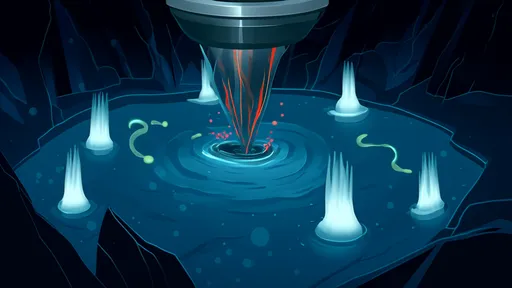
Basalt, a common volcanic rock rich in calcium, magnesium, and iron, possesses a unique ability to react with CO₂. When carbon dioxide is injected into basalt formations, it undergoes a series of chemical reactions that transform it into carbonate minerals like calcite or magnesite. This process, known as carbon mineralization, effectively traps CO₂ in a solid state for geological timescales—thousands to millions of years. The reactions are accelerated by the presence of water, which dissolves CO₂ and facilitates its interaction with the rock's minerals.
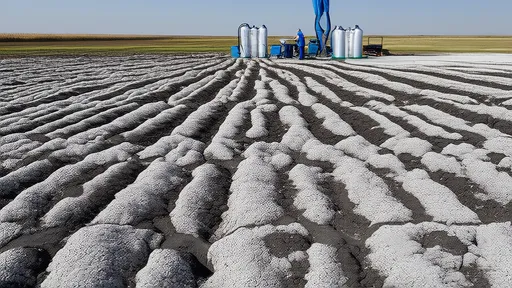
Recent field experiments in Iceland and Washington State have demonstrated the feasibility of this approach. The CarbFix project in Iceland, for instance, injected CO₂ dissolved in water into basaltic formations. Within two years, over 95% of the injected CO₂ had mineralized—far quicker than initially predicted. These findings suggest that basalt carbon storage could be both efficient and scalable, provided suitable geological conditions exist.
Why Basalt? The Geological Advantage
Basalt's global abundance makes it an attractive candidate for large-scale CO₂ storage. Nearly 10% of continental landmass and vast portions of the ocean floor consist of basaltic rock. Regions like the Columbia River Plateau in the U.S. or the Deccan Traps in India contain enough basalt to theoretically store centuries' worth of human CO₂ emissions. Unlike sedimentary basins used in conventional CCS, basalt formations are less prone to leakage due to their reactive nature and structural integrity.
Another critical advantage lies in basalt's mineral composition. The rock contains high concentrations of divalent cations (Ca²⁺, Mg²⁺, Fe²⁺), which readily bond with dissolved CO₂ to form stable carbonates. This stands in stark contrast to sandstone reservoirs, where CO₂ remains in a supercritical state and requires constant monitoring to prevent escape. Mineralization eliminates the need for long-term oversight, reducing both risks and costs associated with traditional CCS.
Challenges and Limitations
Despite its promise, basalt carbon storage faces significant hurdles. The process requires substantial amounts of water—approximately 25 tons of water per ton of CO₂ mineralized. This poses challenges in arid regions where basalt is plentiful but water scarce. Additionally, the energy required to capture, transport, and inject CO₂ remains considerable, though proponents argue that renewable energy could power these operations in the future.
Site selection also presents difficulties. Not all basalt formations are equally reactive; factors like porosity, permeability, and chemical composition vary widely. Extensive geological surveys and pilot projects are needed to identify optimal locations. Furthermore, public acceptance and regulatory frameworks lag behind the technology's development, particularly concerning water usage and subsurface property rights.
The Road Ahead: Scaling and Integration
For basalt mineralization to impact global emissions, it must transition from pilot projects to industrial-scale implementation. Current estimates suggest that a single large-scale facility could mineralize up to 1 million tons of CO₂ annually—equivalent to the emissions of 200,000 cars. However, achieving this requires coordinated efforts between governments, researchers, and industry players.
One promising avenue involves coupling basalt storage with direct air capture (DAC) technologies. DAC systems extract CO₂ directly from the atmosphere, while basalt mineralization provides permanent storage. This combination could create a carbon-negative system, actively reducing atmospheric CO₂ levels. Companies like Climeworks are already experimenting with this approach in Iceland, where geothermal energy powers both DAC and injection processes.
As research progresses, scientists are exploring ways to enhance mineralization rates through catalytic additives or engineered basalt fractures. Others investigate offshore basalt formations, which circumvent freshwater requirements by using seawater. These innovations could dramatically expand the technology's applicability across different geographical regions.
A Natural Solution with Ancient Roots
Ironically, basalt carbon mineralization mirrors Earth's own ancient carbon regulation mechanisms. Over geological timescales, volcanic rock weathering has naturally sequestered vast amounts of CO₂, helping stabilize Earth's climate. Human efforts to accelerate this process represent a rare case of technology emulating nature's wisdom rather than opposing it.
While not a silver bullet, basalt carbon storage offers a tangible pathway to mitigate legacy emissions that renewable energy alone cannot address. As pilot projects yield increasingly positive results, this "carbon prison" may well become a cornerstone of climate stabilization strategies in the coming decades. The key lies in overcoming logistical challenges while ensuring environmental and social sustainability—a complex but necessary endeavor in our carbon-constrained world.

By /Aug 14, 2025

By /Aug 14, 2025

By /Aug 14, 2025

By /Aug 14, 2025

By /Aug 14, 2025

By /Aug 14, 2025
By /Aug 14, 2025

By /Aug 14, 2025
By /Aug 14, 2025
By /Aug 14, 2025

By /Aug 14, 2025

By /Aug 14, 2025

By /Aug 14, 2025

By /Aug 14, 2025

By /Aug 14, 2025
By /Aug 14, 2025

By /Aug 14, 2025
By /Aug 14, 2025
By /Aug 14, 2025
By /Aug 14, 2025
