The universe has always been a source of profound mysteries, and one of its most intriguing puzzles lies in the nature of chirality—the "handedness" of molecules. Recent scientific inquiries have delved into the possibility that the origins of life's molecular asymmetry might be linked to cosmic phenomena, particularly the influence of polarized light in space. This emerging field, often referred to as chiral cosmology, suggests that the very building blocks of life may have been shaped by the universe's inherent polarization.
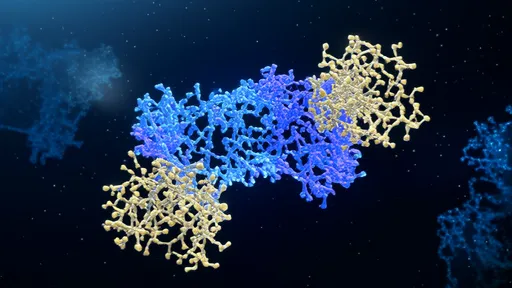
At the heart of this theory is the observation that many biological molecules, such as amino acids and sugars, exhibit a consistent chirality. For instance, life on Earth predominantly uses left-handed amino acids and right-handed sugars. The question of why this bias exists has long perplexed scientists. Some researchers now propose that the answer might lie in the interaction between these molecules and polarized starlight—a phenomenon where light waves oscillate in a specific orientation as they travel through space.
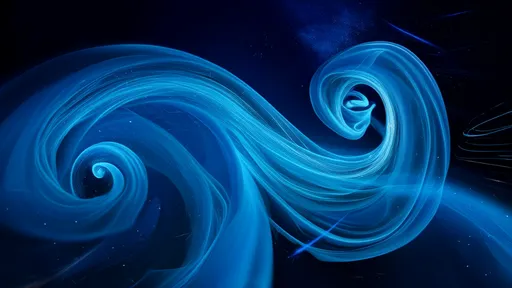
Laboratory experiments have shown that circularly polarized light, which spirals either clockwise or counterclockwise, can induce a slight but measurable bias in the synthesis of chiral molecules. When such light interacts with prebiotic compounds in space, it could theoretically favor the formation of one enantiomer (a mirror-image molecule) over another. Over vast stretches of time, this subtle preference might have been amplified, leading to the homochirality observed in life today. The implications are staggering: the universe itself could have played an active role in setting the stage for life's molecular architecture.
Astrophysicists have identified regions in interstellar space where circularly polarized light is abundant, particularly in star-forming nebulae and the dusty clouds surrounding young stellar objects. These environments are rich in complex organic molecules, and the polarized light they emit could have served as a cosmic "filter," selectively promoting the synthesis of certain chiral forms. If this hypothesis holds, it would mean that the seeds of life's asymmetry were sown long before Earth even formed, embedded in the fabric of the cosmos.
Critics of the theory point out that while polarized light can induce chiral bias, the effect is often weak and might not account for the overwhelming dominance of one enantiomer in biological systems. However, proponents argue that even a small initial bias could have been magnified through processes like autocatalysis, where molecules of one chirality catalyze their own production while inhibiting their mirror-image counterparts. This feedback mechanism, combined with the relentless influence of polarized light, might have been enough to tip the scales decisively.
Beyond its implications for the origins of life, chiral cosmology also raises fascinating questions about the prevalence of life elsewhere in the universe. If polarized light is indeed a universal sculptor of molecular handedness, then life on other planets might share the same chiral preferences as Earth's biology—or, conversely, exhibit opposite biases depending on the local polarization environment. Future missions to analyze extraterrestrial organic compounds, such as those planned for Mars or Europa, could provide critical data to test these ideas.
The study of chiral origins is a reminder of how deeply interconnected life is with the cosmos. From the subtle twist of a photon to the spiral of a galaxy, asymmetry seems to be woven into the universe at every scale. Whether polarized light is the definitive answer to life's chiral bias remains to be seen, but the pursuit of this question is already illuminating new pathways in astrobiology, chemistry, and physics. As researchers continue to probe the cosmic roots of molecular handedness, they may uncover not just the story of life's beginnings, but also the universe's hidden preferences—a subtle tilt toward complexity, diversity, and perhaps, life itself.

By /Aug 14, 2025
By /Aug 14, 2025

By /Aug 14, 2025
By /Aug 14, 2025

By /Aug 14, 2025
By /Aug 14, 2025
By /Aug 14, 2025
By /Aug 14, 2025
By /Aug 14, 2025

By /Aug 14, 2025
By /Aug 14, 2025
By /Aug 14, 2025
By /Aug 14, 2025

By /Aug 14, 2025
By /Aug 14, 2025

By /Aug 14, 2025
By /Aug 14, 2025

By /Aug 14, 2025
By /Aug 14, 2025
By /Aug 14, 2025
