Deep-sea Chemical Sentry: In-situ Monitoring of Hydrothermal Vents

Aug 14, 2025 By

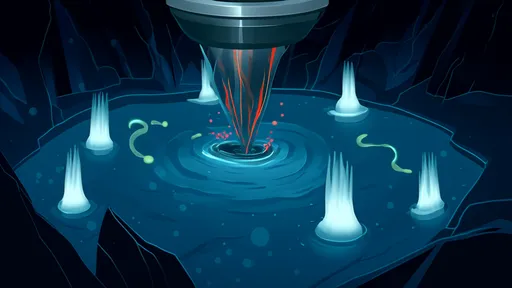
The deep ocean remains one of Earth’s last frontiers, a realm of perpetual darkness, crushing pressures, and extreme temperatures. Yet, within this inhospitable environment, hydrothermal vents emerge as oases of life and geological activity. These underwater geysers spew superheated, mineral-rich fluids, fostering unique ecosystems and playing a critical role in global biogeochemical cycles. Monitoring these dynamic systems in real-time has long been a challenge, but advances in deep-sea technology are now enabling scientists to deploy "chemical sentinels"—sophisticated sensors that provide unprecedented insights into vent chemistry and its implications for oceanography, climate science, and even astrobiology.

The Hidden Pulse of Hydrothermal Systems

Hydrothermal vents are not static features. Their fluid composition, temperature, and flow rates fluctuate in response to geological processes, such as magma movements or tectonic shifts. Traditional sampling methods—collecting water samples via submersibles or remotely operated vehicles (ROVs)—offer only snapshots of these systems. In contrast, in situ monitoring allows for continuous, high-resolution data collection, capturing the vents’ rhythmic variability. This is akin to switching from still photographs to a live video feed of Earth’s underwater heartbeat.

Recent deployments of chemical sensors near vent sites have revealed startling dynamics. For instance, rapid changes in hydrogen sulfide concentrations—a key energy source for vent organisms—can occur over hours or even minutes. Such variability challenges earlier assumptions about the stability of these ecosystems and underscores the need for persistent monitoring. These findings also hint at the intricate feedback loops between geology, chemistry, and biology in the deep sea.

Breaking Technological Barriers

The harsh conditions around hydrothermal vents demand rugged, autonomous instrumentation. Modern chemical sentinels are equipped with spectrometers, electrochemical sensors, and fluid samplers capable of withstanding temperatures exceeding 400°C and pressures hundreds of times greater than at sea level. Innovations like solid-state sensors and self-calibrating systems have extended deployment durations from days to months, reducing the need for frequent human intervention.

One breakthrough involves laser-induced breakdown spectroscopy (LIBS), which can detect trace metals in vent fluids without physical contact. This technique, adapted from Mars rover missions, highlights the cross-pollination between deep-sea and space exploration. Similarly, miniaturized mass spectrometers now provide real-time analysis of volatile compounds, offering clues about subseafloor microbial activity. These tools are not merely measuring the environment; they are decoding the vents’ language of chemistry.

Ecosystems on the Edge

The data from in situ monitors are revolutionizing our understanding of vent-associated life. Tube worms, giant clams, and heat-loving microbes thrive in these extreme habitats, but their survival hinges on precise chemical gradients. Sensors have documented how vent organisms exploit ephemeral plumes of nutrients, migrating or adjusting metabolisms in sync with geochemical shifts. This plasticity may hold lessons for life’s adaptability under climate change or even on other planets.

Moreover, hydrothermal vents are natural laboratories for studying the origins of life. The detection of organic molecules like formate and acetate—building blocks for more complex compounds—supports theories that life could have emerged in similar environments billions of years ago. By tracking these molecules over time, scientists are piecing together the recipe for life’s primordial soup.

Beyond the Abyss: Global Implications

Hydrothermal vents are not isolated curiosities; they influence broader ocean processes. The metals and gases they release—iron, manganese, methane, and carbon dioxide—profoundly affect marine chemistry. Iron, for example, is a limiting nutrient for phytoplankton growth, linking vent emissions to surface ocean productivity and carbon sequestration. In situ monitors help quantify these fluxes, refining models of ocean circulation and climate feedbacks.

There are also practical applications. Vent deposits contain valuable minerals like copper and gold, sparking interest in deep-sea mining. Continuous monitoring ensures that such activities are conducted sustainably, minimizing ecological damage. Similarly, tracking vent emissions aids in detecting underwater volcanic eruptions or methane leaks, serving as early warning systems for hazards.

The Future of Deep-Sea Sentinel Networks

The next frontier is scaling up from individual sensors to networked observatories. Projects like the Ocean Observatories Initiative (OOI) are integrating vent monitors with cabled seafloor arrays, transmitting data to shore in real time. These networks will enable comparative studies across vent fields worldwide, revealing patterns invisible to isolated deployments. Coupled with machine learning, the data could predict vent behavior or identify anomalous events signaling geological unrest.

As technology advances, future sentinels may roam the abyss autonomously. Imagine fleets of AI-guided sensors drifting with currents or perched near vents, forming an intelligent mesh of observation. Such systems would demystify the deep ocean’s role in Earth’s systems, bridging the gap between exploration and understanding. The chemical whispers of hydrothermal vents, once inaudible, are now becoming a chorus—and science is finally listening.

Recommend Posts
Science

Regional Climate Sandbox: Disaster Simulation in Square Kilometers

By /Aug 14, 2025

The concept of a regional climate sandbox represents a groundbreaking approach to understanding and mitigating large-scale environmental disasters. By creating hyper-detailed simulations at the square-kilometer level, scientists and policymakers can now explore disaster scenarios with unprecedented precision. This innovative methodology blends advanced computational modeling with real-world climate data to generate interactive environments where catastrophic events unfold in digital space before they occur in reality.
Science

Mangrove Gene Bank: Salt-Tolerance Gene Transduction Across Species

By /Aug 14, 2025

The dense, tangled roots of mangrove forests have long fascinated scientists with their extraordinary ability to thrive in saline environments. Recent breakthroughs in genetic research have uncovered a potential game-changer: the horizontal transfer of salt-tolerant genes between mangrove species. This discovery not only rewrites our understanding of mangrove adaptation but opens startling possibilities for agricultural innovation in an era of rising sea levels and soil salinity.
Science

Glacial Nano-Armor: High-Reflection Melting Suppression Material

By /Aug 14, 2025

Scientists have made a groundbreaking discovery in the fight against glacial melting—a high-reflectance nanomaterial that could potentially slow down the rapid disappearance of Earth's ice sheets. Dubbed "Glacier Nano-Armor," this innovative coating reflects sunlight with unprecedented efficiency, reducing heat absorption and delaying melt rates. The implications for climate change mitigation are profound, offering a temporary buffer while global carbon reduction efforts continue.
Science

Basalt Carbonation Carbon Dioxide Sequestration

By /Aug 14, 2025

The concept of carbon capture and storage (CCS) has long been a focal point in the fight against climate change. Among the various methods being explored, basalt carbon mineralization stands out as a promising natural solution. Often referred to as the "carbon prison," this process locks away CO₂ permanently by converting it into solid minerals within volcanic rock formations. Unlike other CCS techniques that rely on fragile containment systems, mineralization offers a stable, long-term answer to greenhouse gas emissions.
Science

Marine Cloud Brightening: Aerosol Albedo Regulation

By /Aug 14, 2025

The vast expanse of Earth's oceans has long been recognized as a critical player in regulating global climate patterns. In recent years, scientists have turned their attention to a fascinating phenomenon known as "marine cloud brightening" - a natural process that could hold significant implications for our understanding of climate dynamics. This intricate dance between ocean, atmosphere, and sunlight involves the subtle interplay of aerosols, clouds, and solar radiation, creating what researchers now believe may be one of nature's most sophisticated climate regulation mechanisms.
Science

Transparent Skull Window: In Vivo Observation of Glioma

By /Aug 14, 2025

The human brain, with its intricate network of neurons and blood vessels, has long been a subject of fascination and challenge for neuroscientists. Among the many mysteries it holds, glioblastoma—the most aggressive form of brain cancer—remains a formidable adversary. Traditional methods of studying these tumors often involve invasive procedures or post-mortem analysis, limiting our ability to observe their behavior in real time. However, a groundbreaking technique known as the transparent skull window is revolutionizing how researchers study gliomas in living organisms, offering unprecedented insights into tumor progression and treatment responses.
Science

Deep-sea Chemical Sentry: In-situ Monitoring of Hydrothermal Vents

By /Aug 14, 2025

The deep ocean remains one of Earth’s last frontiers, a realm of perpetual darkness, crushing pressures, and extreme temperatures. Yet, within this inhospitable environment, hydrothermal vents emerge as oases of life and geological activity. These underwater geysers spew superheated, mineral-rich fluids, fostering unique ecosystems and playing a critical role in global biogeochemical cycles. Monitoring these dynamic systems in real-time has long been a challenge, but advances in deep-sea technology are now enabling scientists to deploy "chemical sentinels"—sophisticated sensors that provide unprecedented insights into vent chemistry and its implications for oceanography, climate science, and even astrobiology.
Science

Neutron Holographic Archaeology: Reconstructing the Rust Layer of Bronze Inscriptions

By /Aug 14, 2025

For centuries, archaeologists and historians have grappled with the frustrating reality that some of humanity's most valuable written records – bronze ritual vessel inscriptions from ancient China – lie trapped beneath layers of verdigris and mineral deposits. These corrosion layers, while preserving the bronzes themselves, often obscure the very texts that could shed light on early Chinese civilization. Now, a breakthrough imaging technique is allowing researchers to read inscriptions without physically removing the patina that protects these artifacts.
Science

Cryo-Electron Microscopy Cloud: Dynamic Protein Structure Library

By /Aug 14, 2025

The advent of cryo-electron microscopy (cryo-EM) has revolutionized structural biology, offering unprecedented insights into the dynamic architectures of proteins. Among its most transformative applications is the creation of protein dynamic structure libraries—a burgeoning resource that captures proteins in their native, flexible states. These libraries are not mere static snapshots but dynamic repositories that reflect the conformational heterogeneity and functional plasticity of proteins, providing researchers with a deeper understanding of molecular mechanisms.
Science

Attosecond Laser Knife: Precise Manipulation of Molecular Vibrational States

By /Aug 14, 2025

The realm of ultrafast science has witnessed a groundbreaking leap with the advent of attosecond laser technology, particularly in the precise manipulation of molecular vibrational states. This cutting-edge tool, often referred to as the attosecond laser scalpel, is redefining the boundaries of quantum control and molecular dynamics. By operating on timescales shorter than the natural motion of electrons within molecules, scientists can now probe and influence chemical reactions with unprecedented precision.
Science

Gravitational Waveyardstick: A New Scale for the Expansion Rate of the Universe

By /Aug 14, 2025

For decades, astronomers have grappled with a fundamental question: How fast is the universe expanding? The answer, encapsulated in the Hubble constant (H0), has remained frustratingly elusive, with conflicting measurements from different methods creating what scientists call the "Hubble tension." Now, a groundbreaking approach using gravitational waves—ripples in spacetime caused by cataclysmic cosmic events—is emerging as a promising new tool to resolve this mystery.
Science

The Origin of Chiral Universe: Synthesis Bias of Polarized Light Molecules

By /Aug 14, 2025

The universe has always been a source of profound mysteries, and one of its most intriguing puzzles lies in the nature of chirality—the "handedness" of molecules. Recent scientific inquiries have delved into the possibility that the origins of life's molecular asymmetry might be linked to cosmic phenomena, particularly the influence of polarized light in space. This emerging field, often referred to as chiral cosmology, suggests that the very building blocks of life may have been shaped by the universe's inherent polarization.
Science

Taming Turbulence AI: Deep Learning Forecasts Vortex Evolution

By /Aug 14, 2025

In the ever-evolving frontier of fluid dynamics, researchers have achieved what was once considered nearly impossible - predicting the chaotic dance of turbulent vortices using artificial intelligence. A groundbreaking study published in Nature Physics demonstrates how deep learning algorithms can now forecast the evolution of complex vortex systems with unprecedented accuracy, potentially revolutionizing fields from aerospace engineering to climate modeling.
Science

Topological Photonic Chips: Integrated Optical Circuits for Quantum Computing

By /Aug 14, 2025

The field of quantum computing has long been dominated by superconducting qubits and trapped ions, but a new contender is emerging—topological photonic chips. These devices harness the unique properties of topological photonics to create robust, error-resistant pathways for light, paving the way for scalable and fault-tolerant quantum computation. Unlike traditional photonic systems, which are highly sensitive to imperfections and environmental noise, topological photonic chips offer a promising solution by leveraging the inherent stability of topological states.
Science

The Hunt for Sterile Neutrinos: Capturing Phantoms in Underground Laboratories

By /Aug 14, 2025

Deep beneath the Earth's surface, where cosmic interference fades into silence, scientists are hunting for one of the universe's most elusive phantoms—sterile neutrinos. These hypothetical particles, if they exist, could rewrite our understanding of particle physics and dark matter. Laboratories buried under mountains or nestled in abandoned mines have become the frontline in this decades-long pursuit, where researchers deploy ultra-sensitive detectors to catch the faintest whispers of these ghostly particles.
Science

Microalgae Protein Factory: Wastewater Nutrient Conversion System

By /Aug 14, 2025

The global push for sustainable protein sources has led researchers to explore unconventional yet promising avenues. Among these, microalgae-based protein production systems have emerged as a revolutionary approach that simultaneously addresses food security and wastewater treatment. These microscopic photosynthetic organisms are now being harnessed in specialized facilities called microalgae protein factories, where they transform wastewater nutrients into valuable biomass rich in proteins and other nutrients.
Science

Mechanical Bee Pollination Hive: AI-Vision Orchard Management

By /Aug 14, 2025

The agricultural sector is undergoing a quiet revolution as artificial intelligence merges with precision farming techniques. Among the most promising developments is the emergence of robotic pollination systems, where mechanical bees equipped with AI vision are transforming orchard management. These autonomous pollinators don’t just mimic nature—they enhance it, offering solutions to declining bee populations while gathering unprecedented data about crop health.
Science

Salt-alkali Soil Electropulse Remediation: Iontophoresis Desalination Technique

By /Aug 14, 2025

For decades, farmers and environmental scientists have grappled with the persistent challenge of salt-affected soils—a global issue reducing agricultural productivity across arid and coastal regions. Traditional desalination methods often prove water-intensive, slow, or cost-prohibitive. Now, an innovative electrochemical technique is rewriting the rules of soil remediation. Researchers report that applying precisely controlled electric pulses to saline-alkali soils can forcibly migrate salt ions, achieving desalination rates previously thought impossible.
Science

Gene Editing for Virus-Resistant Plants: Rainforest Trials

By /Aug 14, 2025

In a groundbreaking initiative that could reshape the future of tropical agriculture, scientists have begun field trials of genetically edited cacao trees designed to resist devastating viral infections. The experiments, conducted deep within the biodiverse rainforests of South America, represent a daring fusion of cutting-edge biotechnology and ecological conservation.
Science

Root Ultrasonic Tomography: 3D Reconstruction of Soil Structure

By /Aug 14, 2025

The unseen universe beneath our feet has long fascinated scientists and agriculturists alike. Roots weave intricate networks through soil, interacting with microorganisms, nutrients, and water in ways that remain partially understood. Traditional methods of studying these subterranean systems—such as excavation or 2D imaging—often disrupt the very structures they aim to analyze. Now, a groundbreaking approach combining ultrasonic tomography and advanced 3D modeling is revolutionizing our ability to visualize and comprehend soil architecture non-invasively.